The Neocloud Divergence: Why Seawolf Capital is Shorting CoreWeave and Buying the Nebius Thesis
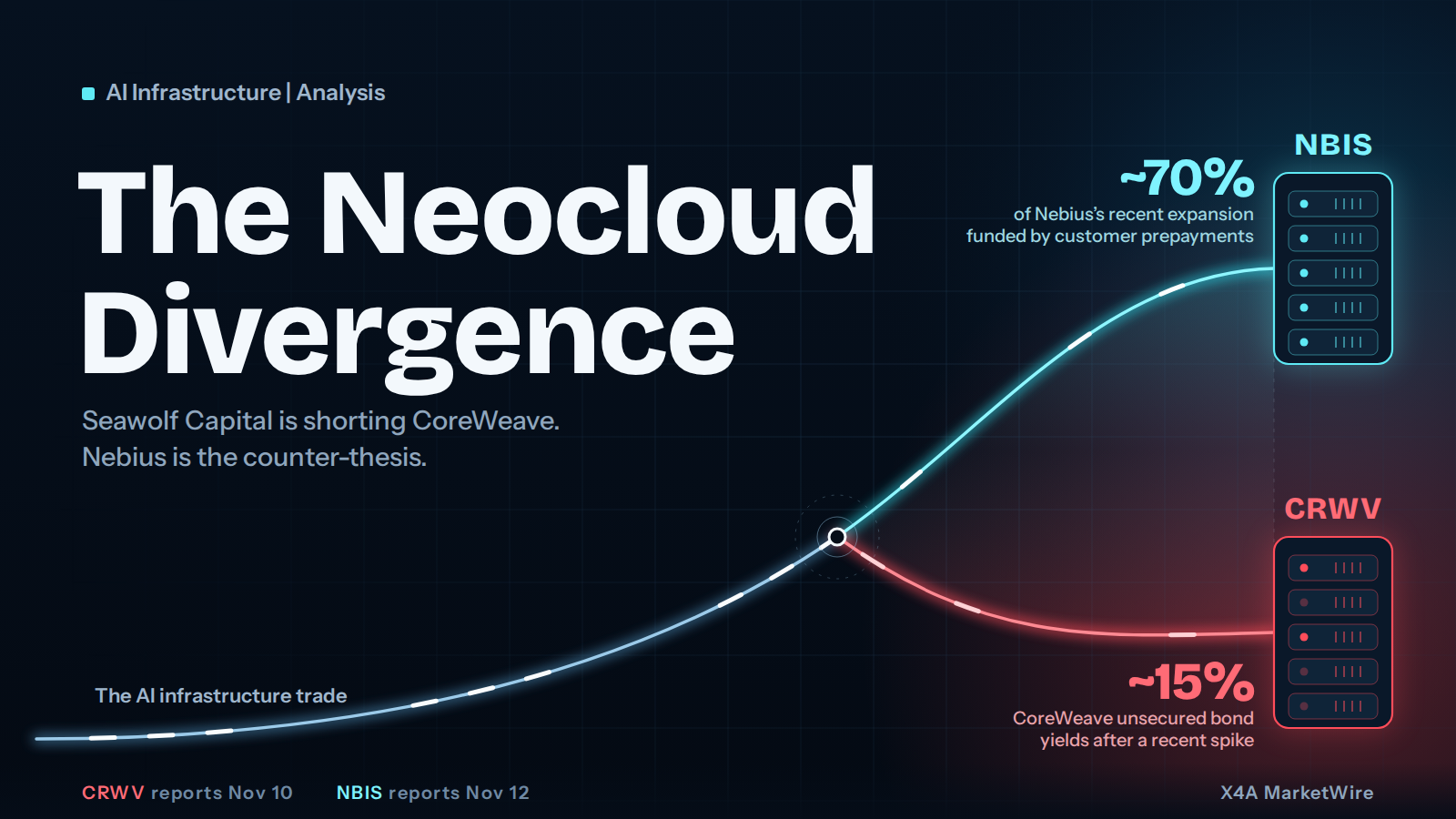
(croconmedia|X4A/msc/dgold – Oct 28, 2026) The AI infrastructure trade is entering a brutal new phase. The era of blind capital deployment is over. Investors are finally looking past massive backlogs to inspect the structural plumbing of specialized cloud providers. This shift is creating a sharp divide between highly leveraged operators and financially resilient platforms.
The battle lines became clear this week. Seawolf Capital, the hedge fund led by Vincent Daniel and Porter Collins of Big Short fame, announced a major short position against CoreWeave. Their thesis targets the exact vulnerability that smart money has been quietly questioning: unsustainable capital structures in a high interest rate environment.
The Debt Trap in AI Infrastructure
CoreWeave expanded at breakneck speed by leveraging its balance sheet. The company accumulated over 50 billion dollars in total liabilities and leasing commitments. To sustain its buildout through 2027, analysts estimate the firm needs to secure at least ten billion dollars in additional capital.
In an economy with sticky inflation and restrictive central bank policies, that debt is becoming incredibly expensive. Yields on CoreWeave unsecured bonds recently spiked toward 15 percent. This market signal indicates acute credit stress.
Seawolf compares this trajectory to past Silicon Valley market bubbles. Buying expensive, rapidly depreciating assets with heavily leveraged funds works during a zero interest rate regime. In today market, it risks structural wealth destruction if infrastructure yields fall below the cost of capital.
Why the CoreWeave Bear Case Validates Nebius
The market is currently punishing all neoscalers indiscriminately. Nebius Group stock fell alongside its peer group during the recent credit scare. However, a closer look at the balance sheets reveals that Nebius is actually the structural antidote to the CoreWeave dilemma.
Nebius is building the premium independent AI cloud without the toxic leverage profile. The structural differences between the two contenders are massive:
- Funding Mix: While CoreWeave relies on aggressive debt and leasing structures, Nebius funded roughly 70 percent of its recent expansion through customer prepayments. This strategy insulates the company from volatility in the bond markets.
- Tier One Banking Backing: Nebius recently secured a 3.5 billion dollar financing facility with Citigroup. The terms are highly favorable, capping the interest rate well below the double digit yields that distressed operators face.
- Capital Efficiency: The capital expenditure budget for Nebius remains roughly 39 percent smaller than CoreWeave, significantly lowering execution risks while achieving similar deployment speeds.
The Upcoming November Showdown
The market will get a definitive reality check very soon. Both companies are scheduled to report their third quarter financial results in mid November. CoreWeave reports on November 10, followed by Nebius on November 12.
These reports will force Wall Street to differentiate between pure GPU volume and actual balance sheet health. For investors who believe in the long term power of specialized AI clouds, the current sector correction is creating a clear entry point. The upcoming data will likely prove that while some neoclouds face severe financial stress, Nebius is positioned to emerge as the ultimate independent winner next to the hyperscalers.
Disclosure: This article represents commentary and opinion for informational purposes only. It does not allege unlawful conduct by any person or entity and should not be interpreted as investment, legal or financial advice.
This is not financial advice. Always conduct your own due diligence and consider the inherent volatility and risks associated with small-cap equities, private investments, cryptocurrencies, and pre-IPO holdings.
DYOR, NFA, and E&OE. This article is for informational purposes only and does not constitute investment advice. It is not an investment recommendation or any form of advisory opinion, but solely reflects the views of the author(s), who may hold positions in the securities discussed. Always conduct your own due diligence. Past performance is not a reliable indicator of future results. Errors and omissions excepted.
Market data displayed by TradingView. Market data may be delayed.